
































Game News

3D Cube Merge 2048: Addictive Puzzle Fun
Game Introduction Forget the flat 2048 you know—this is a total 3D revolution! Numbers meet dynamic physics as cubes bounce, collide, and merge in ways that’ll keep you on your toes. Every tap brings a fun surprise, with playful cube interactions that turn classic merging into an immersive 3D adventure. Challenge friends or colleagues to climb the ranks—who’ll be the first to master the bouncy, addictive world of 3D cube merging? Game Features 1. Innovative 3D Spatial Gameplay:Break free from traditional 2D constraints and place number merging in a three-dimensional space. Use spatial thinking to plan cube movements and observe layouts from multiple angles, making the classic gameplay more immersive and challenging.2. Dynamic Physics Collision Effects:Cubes don’t just merge—they truly bounce, collide, and trigger chain reactions. Every move brings a random surprise, and the realistic feedback from the physics engine makes the merging process full of fun and unpredictability.3. Balanced Strategy and Casual Fun:Retain the core gameplay of "merging numbers to 2048" with easy-to-learn controls. The progressive difficulty gradient tests logical calculation skills while offering a relaxing, stress-relieving experience, suitable for players of all ages.4. Real-time Social Competition:Supports online battles with friends and colleagues, competing for rankings. The real-time competitive atmosphere fuels the desire to challenge—who will be the first to synthesize the target number, fill the 3D board, and become the highlight?5. mmersive Audio-Visual Experience:3D rendering delivers realistic cube textures, with vibrant colors and a minimalist interface to reduce visual fatigue. Exclusive sound effects and vibration feedback during merging and collisions enhance operational immersion.6. Rich Gameplay Extensions:Includes various theme skins and fun props, with regular updates to keep the game fresh. Supports slide controls or gravity sensing, adapting to different players’ operating habits. Gameplay and Controls 1. Basic Operations: Slide the screen or tilt the device (gravity sensing) to control the movement of 3D cubes; you can also long-press a cube, drag it, and release to adjust its position.2. Core Objective: Merge cubes with the same number (e.g., 2+2=4, 4+4=8) to gradually merge them into 2048 and higher values.3. Gameplay Mechanism: When cubes move, they trigger physical effects of bouncing and colliding. Adjacent cubes with the same number will merge automatically; you need to plan the layout reasonably to avoid filling up the space— the game ends when there are no valid moves left.4. Item Usage: Use the bomb item to clear designated obstacle cubes; when stuck, activate the rocket item to randomly eliminate some cubes. Game Guide Merge Cubes 2048 3D breaks the shackles of traditional 2D gameplay, with 3D space and physical collisions as its core highlights. Many players get stuck because they ignore the 3D characteristics. This guide covers everything from operational details to layout strategies, helping you easily break through bottlenecks and steadily merge high-level cubes. Optimizing basic operations is a prerequisite for advancement. Sliding the screen is suitable for moving cubes over a large area, but it lacks precision when dealing with dense layouts. At this point, switch to gravity sensing for fine adjustments—slightly tilt the device to control the cubes to slide slowly, which can effectively avoid collision chaos caused by misoperations. The long-press and drag function is more suitable for precise layout, especially when there are multiple small cubes around high-value cubes. Directly drag the target cube to the merging position to skip the uncertainty of physical bouncing. The key skill is to predict the collision trajectory: observe the distance between cubes before moving. If there are obstacles on the path, drag small cubes first to clear the channel and reduce the layout space consumed by invalid bouncing. 3D layout strategy is the core of merging high-level cubes. Different from 2D planes, 3D space requires considering both "front-back layers + left-right columns". It is recommended to adopt the "corner concentration method": select the upper-left corner as the core area, always place the highest-value cube here, and stack low-value cubes around it. This can prevent high-value cubes from being scattered in different layers and reduce the difficulty of cross-layer merging. At the same time, clean up the back row regularly. Novices often ignore the cubes in the back layers, leading to full space. After every 3 merges, drag the front cubes to check the back row, and prioritize merging cubes with the same value in the back row to keep the 3D space unobstructed. Item usage should adhere to the principle of "precision and efficiency". The bomb item should never be used for random cleaning; it should be saved to break "dead ends"—when a high-value cube is surrounded by low-value cubes and cannot move, aim at the obstacle cube on the outermost layer of the encirclement and use it to open the merging channel at one time. The rocket item is suitable for use when 1/3 of the space remains, as random elimination can maximize the available space. Using it when the space is sufficient may instead scatter the group of cubes that are about to merge. It is recommended to pause the game before using items, plan the elimination target, and avoid waste. The advanced scoring skill lies in "chain merge planning". Observe the distribution of cubes on the field in advance. If there are multiple small cubes with the same value (such as four "4s"), first move the edge small cubes to trigger the first merge, and use collision rebound to drive the secondary merge of surrounding cubes to form a chain reaction. In addition, try to let high-value cubes "drive" low-value cubes when merging. For example, let "128" collide with surrounding "2" or "4" when merging, and use physical rebound to make small cubes return to their positions automatically, improving layout efficiency. Master these skills, and you will easily refresh your record in the 3D merging world.
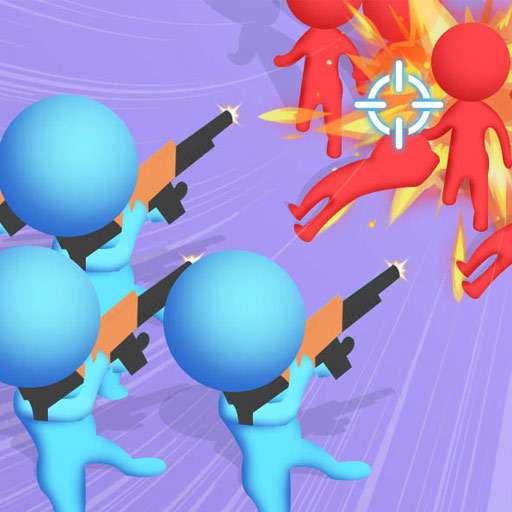
3D Survival Surge: They Come Closing In
Game Introduction 3D They Are Coming is a pulse-pounding action defense game that pulls you straight into the thick of the fight. Gear up for nonstop intensity as you craft tactical defense plans and nimbly position yourself to mow down wave after wave of relentless attackers. With difficulty ramping up steadily across diverse levels, each new stage brings fresh hurdles—from swarming foes to tricky attack patterns—that demand quick thinking and sharper reflexes. It’s not just about surviving; it’s about outsmarting the onslaught and turning every showdown into a satisfying triumph. Game Features 1. Dual-Core Gameplay: Strategy + Action Combine tactical planning with real-time operations. You need to map out defense positions in advance while moving nimbly to dodge attacks. Achieve efficient elimination of approaching hordes through precise positioning and firepower distribution, balancing strategic depth with operational satisfaction. 2. Progressive Horde & Difficulty Curve Adopt a wave-based core mechanism, where waves of enemies keep pressing with steadily increasing intensity. There’s a rich variety of enemies, including assault-type and swarming-type with distinct attack patterns. Later levels unlock special enemies and complex attack combinations, maintaining fresh challenges at all times. 3. 3D Immersive Pressure Experience Full 3D scenes create a strong visual impact, with hordes swarming in for an intense sense of pressure. Dynamic lighting and smooth combat effects enhance immersion, providing clear feedback for every defensive counterattack and ramping up the tension to the max. 4. Weapon & Defense Progression System Earn resources by defeating enemies to unlock diverse weapons or upgrade existing gear, boosting key attributes like damage and range. Optimize your defense positions and strengthen survival advantages through rational resource allocation, forming a positive growth cycle. 5. High-Freedom Levels & Replay Value Levels feature diverse scene styles, and different terrains enable differentiated defense strategies (e.g., narrow passages suit area attacks). Random elements are integrated into enemy spawns and resource drops, paired with gradually unlocked high-level challenges for a fresh experience every time you play. Gameplay and Controls 1. Basic Operations Movement: Control the character to move and avoid horde sieges Attack: Trigger attack command to automatically lock and attack enemies within range Weapon Switching: Switch unlocked weapons via shortcuts 2. Core Gameplay Wave Defense: Defeat all enemies in the current wave to unlock the next; seize advantageous positions like narrow terrains in advance Resource Collection: Collect resources dropped by enemies to upgrade weapons or unlock defensive items Level Progression: Clear levels to unlock higher difficulty and face new enemies with composite attack patterns 3. Advanced Tips Prioritize eliminating high-risk enemies like fast assault units to reduce survival pressure When swarming enemies attack, switch to area weapons to improve clearing efficiency Game Guide The core appeal of "They Are Coming 3D" lies in the dual gameplay of "strategic layout + real-time operation". To clear high-difficulty levels efficiently, you need to balance terrain utilization, resource allocation, and wave prediction. The following full-process tips from early-stage layout to late-stage breakthrough will help you easily tackle horde attacks. I. Early-Stage Key Points: Terrain Seizure and Resource Accumulation You must survey the terrain within the first 10 seconds of the start. Prioritize the combined terrain of "narrow passage + open rear area" — narrow passages can restrict horde expansion and greatly reduce the risk of being besieged, while the open rear area reserves space for weapon switching and position adjustment. The first 3 waves of enemies have low intensity; it is recommended to use the initial weapon to clear the field throughout and deliberately retain basic resources dropped by enemies to avoid wasting resources on unlocking low-level weapons prematurely. After the 3rd wave, concentrate resources to upgrade the initial weapon to "20% damage increase" and unlock the first area attack skill to prepare for mid-stage swarming enemies. II. Mid-Stage Breakthrough: Wave Prediction and Weapon Adaptation Waves 5-10 are the difficulty dividing line, with combined attacks of fast assault enemies and small swarming enemies. When dealing with them, follow the principle of "eliminate fast enemies first, then clear swarms": when seeing assault enemies marked in red, immediately switch to a high-damage single-target weapon (such as an upgraded rifle) for precise elimination to avoid flanking raids; when swarming enemies approach, switch to an area weapon (such as a shotgun) and stand at the narrow passage for AOE clearing. After each wave, prioritize upgrading the weapon's "range" attribute, followed by "fire rate". For defensive items, you only need to unlock the "simple roadblock" — place the roadblock 1 meter from the passage entrance, which can delay enemy advancement by 2-3 seconds. III. Late-Stage Solution: Resource Cycle and Combination Strategy After wave 15, elite enemies (marked with shields) will be unlocked. They have 3 times the health of ordinary enemies and will charge with small hordes. At this time, you need to build a defense system of "weapon combination + terrain traps": use the "sniper rifle + flamethrower" combination as the main weapons — the sniper rifle breaks the elite's shield from a distance, and the flamethrower clears the attached horde at close range; place roadblocks on both sides of the passage to form a "funnel-shaped" defense area, forcing enemies to advance in a concentrated manner. For resource allocation, reserve 30% of resources for weapon reset after resurrection to avoid collapse due to a single mistake. Core of Clearance: Always maintain the combat logic of "one attack point + one retreat route" and avoid fighting in open areas; check the weapon status every 3 waves to ensure the core weapon level is not lower than the recommended level for the current stage. Mastering the above skills will allow you to steadily break through high-difficulty levels and efficiently accumulate resources to unlock high-level equipment.
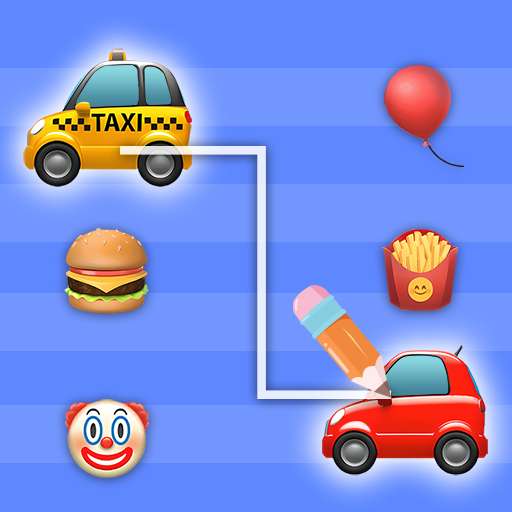
Connect Fun Emoji: Clever Puzzle Challenges
Game Introduction Who can resist the joy of "connecting emojis while clearing levels"? Emoji Puzzle Connect is exactly such a treasure casual game! It combines classic line-connecting gameplay with cute, soft icons—just tap to play, and rely on logic to clear each level. It’s perfect to open up when you’re waiting for milk tea or slacking off while scrolling through your phone. Connect cups of "same-style milk tea emojis" with your fingertips, watch the lines smoothly bypass cat and smiley icons, and the moment they all disappear with a "swish" is so relaxing you’ll want to tap the table! You might originally only want to play one round to pass the time, but end up staring at the screen to find the best connection and unconsciously clear three levels. It seems easy, but it’s actually super easy to "get hooked"—after all, who can resist the double joy of cute icons + small brain-teasing challenges? Give it a try if you don’t believe me—you’ll definitely not want to close it once you open it! Game Features 1. Core Gameplay: Low-Threshold Line-Connecting Puzzle Centered on "connecting same-style emojis", you can master it in 1 minute—just draw non-crossing lines to eliminate. Some levels have time limits; there are no complex rules, and you can still gain puzzle-solving satisfaction by planning the optimal path. 2. Audio-Visual Experience: Healing, Cute & Stress-Relieving With cute emojis and bright backgrounds, smooth effects and lively sound effects play when eliminating. Every operation has real-time feedback, offering double healing for both eyes and ears—no fatigue even after long play. 3. Difficulty Design: Progressive & Addictive Difficulty is smoothly progressive: easy to start with in the early stages, and later levels increase emoji density and path obstacles. It’s "seemingly easy but with depth", making it easy to fall into the cycle of "playing one more level after clearing one". 4. Scene Adaptation: All-Time & Zero-Threshold A single round takes only 1-5 minutes, suitable for fragmented time like waiting for a bus or during lunch breaks. It supports offline standalone mode, runs smoothly even on low-spec devices, and you can play anytime you open it. 5. Added Value: Dual Benefits for Entertainment & Brain The line-connecting process exercises logical and spatial thinking. Real-time feedback after clearing levels brings a sense of small accomplishment—it relieves stress while subtly stimulating the brain. Gameplay and Controls Objective: Connect and eliminate same-style emojis on the screen to clear the board and pass the level. Controls: Long-press any emoji with your finger, then drag to draw a line to another identical emoji. Rules: Lines must not cross. Some levels require completion within a time limit. Tip: Prioritize path planning and avoid other icons to reduce mistakes. Game Guide Want to master Emoji Puzzle Connect with ease and unlock efficient level-clearing skills? This guide covers beginner basics, advanced strategies, and stuck-level fixes to help you nail this line-connecting puzzle—no more time-limit stress! 1. Beginner Basics: Grasp the Core First The key rule: Connect identical emojis with no more than 3 folded lines, and paths must not cross. All pairs must be matched within the time limit (if applicable). Don’t rush to draw lines right away. Spend 3 seconds scanning the entire board first, and prioritize marking identical emojis on the edges or corners. These positions have limited connection ranges, so they’re less likely to conflict with later paths. For example, connect the "cat" emojis in the corners first, then tackle the dense middle area—this cuts down on crossing mistakes. 2. Advanced Strategy: Master Path Planning For dense layouts, use L-shaped folded lines first instead of straight lines that cut through the board (this blocks other pairs). If two identical emojis are blocked by multiple icons, clear the easy-to-connect pairs nearby first to free up space. Watch out for "blocking emojis"—repeated icons stuck in the middle. Clearing these early prevents the "no path left" dilemma later. 3. Time-Limited Levels: Balance Speed and Accuracy The secret here is to split your time wisely: Use the first 30 seconds to target "obvious pairs" (e.g., adjacent emojis or those in the same row/column) to quickly build progress. For the remaining time, focus on complex pairs. Try the zone division method: split the board into 2-3 zones and check each one individually—this avoids wasting time re-scanning the whole board. If time is tight, skip pairs that need multiple folds. Prioritize basic clears to guarantee you pass. 4. Stuck? Try These Fixes Don’t waste time forcing a path. Instead: Check edges and corners again—designers often hide key pairs in visual blind spots. If paths keep crossing, undo your last move and use reverse reasoning: plan from the target emoji backward to your starting point. Use the hint feature when stuck. It helps break through mental blocks fast. 5. Long-Term Progress: Build Pattern Recognition Learn common layout rules: For "cross-shaped boards," connect the center emoji to those around it first. For "grid-shaped boards," clear rows first, then columns. Also, develop a "prediction habit": after each pair, check how the remaining emojis are arranged. This stops you from blocking critical paths for future pairs. Finally, remember the core principle: Start with simple, then complex; edges first, then center; speed up in time limits; find clues when stuck. Beginners should practice on easy levels to build familiarity with the controls, then move to hard time-limited ones. With a mix of observation, planning, and rhythm, you’ll become an emoji-connecting pro in no time!
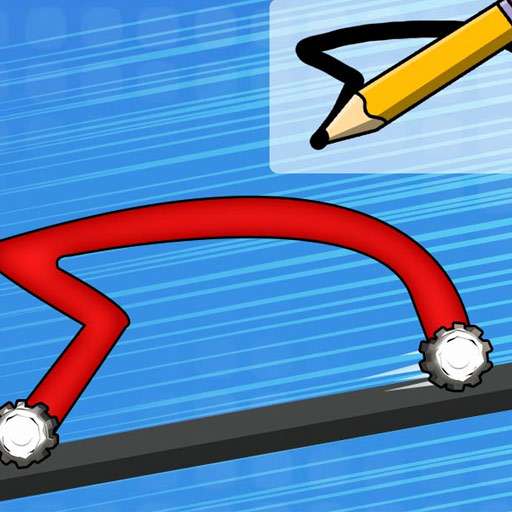
3D Draw Racer: Craft Cars That Move
Game Introduction Unleash your inner designer in Draw Car 3D—no rules, just creativity and speed! Grab the sketch pad, doodle, curve, or craft your perfect ride from scratch—whether it’s a sleek speedster, a rugged off-roader, or something totally one-of-a-kind. Once your design is done, hit the track and put it to the test: navigate twists, jumps, and tricky obstacles to outpace the competition. The smarter your design, the smoother your drive—and the faster you’ll unlock new tracks, challenges, and customization perks. Ready to draw, race, and dominate with a car that’s 100% yours? Game Features 1. Boundless Vehicle Creation, Turn Ideas Into Reality No preset car model restrictions—enjoy a fully open drawing pad to create vehicles of any shape, from irregular designs to minimalist styles. Adjust brush thickness and colors freely. No professional design skills required—sketch casually to craft a car with your unique visual style. 2. Physics-Engine Driven, Design Shapes Performance Realistically simulates physics like gravity, load-bearing, and air resistance. Wheel count, body aerodynamics, and center of gravity directly affect speed and pass rate. Strong connection between design and actual combat: "Good-looking doesn’t always mean easy to drive". Balance creativity and practicality for a brain-teasing, addictive experience. 3. Diverse Tracks + Progressive Levels, Challenges Escalate Tracks cover multiple terrains including cities, mountains, deserts, and snowfields, paired with random obstacles like ramps, traps, and narrow bridges for constant freshness. Difficulty increases gradually—from basic navigation to extreme racing. Optimize your car design to clear each level efficiently. 4. Low Entry Barrier, High Skill Ceiling For All Players Single-finger control for both drawing and driving. Intuitive interface allows quick starts during fragmented time, perfect for casual relaxation. Dual paths for creativity and skill: Enjoy casual doodling to unwind, or dive deep into optimizing structural designs to challenge clearance efficiency limits. 5. 3D Hand-Drawn Aesthetics + Immersive Sound, Healing Experience Fresh and cute 3D hand-drawn visuals with childlike charm, featuring visible brush strokes and color combinations for stress-free viewing. Immersive sound effects including brush friction, engine roars, and paint splatters. Enhance engagement during both drawing and driving phases. Gameplay and Controls 1. Tap to start, then draw your car (including body, wheels and other key structures) with your finger on the designated sketch pad. 2. After drawing, the car automatically enters the track—no extra direction control needed. 3. Let your design adapt to the terrain, navigate obstacles and ramps, and reach the finish line to clear the level. 4. Adjust brush thickness and color, optimize your design, and retry for higher efficiency. Game Guide The core fun of "Draw Car 3D" lies in balancing creativity and practicality. Clearing levels doesn’t depend on complex doodles, but on designing vehicles that adapt to physical rules and track requirements. Master the following tips to unlock levels quickly while enjoying the joy of creation. First, lay a solid design foundation. Wheels are the core—opt for a 3-4 wheel layout, with front wheels slightly larger than rear ones. Match the wheel spacing to the body width to avoid rollover from one-sided weight. The body should follow the principle of "aerodynamics + lightweight": connect the front and rear wheels with smooth curves to reduce air resistance, and avoid overly complex shapes. Extra lines add weight and slow the car down. Controlling the center of gravity is crucial—concentrate the main body below the wheel axis to greatly improve stability, especially when tackling ramps and sharp turns. Second, adapt designs to specific tracks. For flat, curvy urban tracks, create narrow, short-wheelbase cars for flexible turning. Mountain tracks with ramps and obstacles require higher chassis and outward-extended wheels to increase ground contact and avoid bottoming out. On low-grip icy tracks, add more wheels (4-6) and widen/shorten t he body to prevent slipping. For soft desert terrain, use larger wheels with wider spacing to enhance passability. Advanced skills focus on details. Use thin lines for key structures and thick lines only to reinforce core body parts—avoid overall thickening that causes excess weight. After your first attempt, optimize based on failure points: lengthen the body for more inertia if climbing is difficult, or shrink the side contours if collision with obstacles is frequent. Use colors to distinguish structures for quick adjustments and more efficient retries. Don’t overlook common pitfalls. Avoid prioritizing "weird shapes" over practicality—exaggerated designs often fail due to unbalanced centers of gravity or high resistance. Never use fewer than 3 wheels or uneven wheel distribution, a common rookie mistake. Skip decorative details; simplifying the structure is the key to balancing speed and stability. In short, the game’s clearance logic is "design serves performance". Ensure basic driving ability first, then gradually add creative elements. Experiment with different layouts, summarize track adaptation rules, and conquer all levels effortlessly with your custom car. Would you like me to refine a **concise 300-word version** of this guide for quick reference, or add a "track-specific design checklist" for key terrain types?

Road Puzzle Escape: Car Mystery Quest
Game Introduction Looking for an addictive brain teaser that’s easy to play but hard to put down? Meet Car Escape Game — the ultimate puzzle challenge that sharpens your mind while keeping you relaxed! Operation couldn’t be simpler: slide horizontally parked cars left or right, shift vertical ones up or down, and clear a path for the red fire truck. Your goal? Guide it safely to the rightmost exit of the parking lot to win each level. Perfect for puzzle lovers, this game blends satisfying gameplay with just the right amount of challenge. Unwind, relieve stress, and keep your brain active all at once — no complicated rules, just pure puzzle fun. Ready to untangle the parking chaos and test your problem-solving skills? Dive in and start your escape adventure now! Game Features 1. Classic puzzle gameplay reimagined:Blends Hua Rong Dao logic with parking scenarios. Slide horizontal/vertical cars to plan paths, with the core goal of guiding the red fire truck to escape. Every move tests spatial layout skills.2. Zero learning curve, easy to pick up:No complex tutorials required. Control cars with simple finger swipes — horizontal cars slide left/right, vertical cars shift up/down. Accessible to players of all ages.3. Dual benefits: entertaining and brain-boosting:Naturally exercises logical reasoning and predictive thinking during puzzles. Avoids frustration from excessive difficulty, achieving "exercise your brain while relaxing."4. Stress-relieving and therapeutic:Smooth sliding feedback and the satisfying experience of "resolving congestion," paired with a minimalist art style, deliver a strong sense of accomplishment and effectively ease daily stress.5. Progressive and layered levels:Levels upgrade gradually from easy to difficult, with diverse, non-repetitive layouts. Maintains puzzle freshness, catering to both new players and seasoned puzzle enthusiasts.6. Focused objectives for immersion:Clearance conditions are intuitive and clear, with no extra plot foreshadowing. Allows players to focus on path planning, enabling quick enjoyment of complete puzzle-solving fun even in fragmented time. Gameplay and Controls 1. Horizontally parked cars: Swipe left/right with your finger2. Vertically parked cars: Swipe up/down with your finger3. Core goal: Clear a path for the red fire truck4. Clearance condition: Guide the red fire truck to the rightmost exit5. Operation aid: Tap "Reset" to re-plan if you make a wrong move Game Guide Centered on "vehicle adjustment in limited space", Car Escape Game features seemingly simple sliding operations that actually require precise spatial judgment and action prediction. Master the core logic of "First analyze the layout, then adjust, and avoid reckless attempts", and both new players and those stuck on levels can clear stages efficiently. Below are key practical strategies. Newbie Breakthrough: Locate "key obstacles" in 3 seconds. You don’t need to check every car at the start—focus directly on the red fire truck. First, check if there are horizontal cars blocking its front; second, see if vertical cars in its vertical column are stuck. These two types are "primary obstacles". Prioritize handling vertical obstacles: if there’s a vertical car above the fire truck with empty space at the top, slide it up to free vertical space; if there’s empty space below, slide it down. For horizontal obstacles, check left/right empty spaces: short cars (2-grid) can slide directly to empty spots; long cars (3-4-grid) require first confirming if there are movable vertical cars nearby to free up enough space for horizontal movement. Advanced Breakthrough: Make good use of the "Short Car Transfer Method". Mid-game often sees "interlocked long cars", and 2-grid short cars become the key. For example, horizontal long car A is blocked by vertical long car B, and there’s a short car C next to B. First, slide C to a temporary empty space to allow B to move up/down and free up space for A to slide; after A is in place, move C back to avoid blocking the fire truck’s escape path. Remember the adjustment priority: "Priority to the escape path"—since the fire truck needs to escape to the right, prioritize clearing cars on its right and directly above/below. Cars on the left far from the exit can be left untouched temporarily to reduce ineffective operations. High-Level Stuck Solution: Reverse Deduction + Dead-Corner Check. For levels with multiple long cars and high density, forward planning is prone to confusion—switch to "reverse deduction": work backwards from the rightmost exit. The grid immediately left of the exit must be empty; if there’s a horizontal car there, move it to the far left in advance. Further left, if there are vertical cars, ensure they can move to the top or bottom empty spaces. Meanwhile, check "dead-corner cars": if a long car in the corner can’t move, it’s likely because the short car next to it isn’t in place—adjust the short car first to unlock the long car. When stuck, don’t keep trying blindly; if there’s no progress in clearing the path within 5 moves, tap "Reset" and re-observe the movable directions of long cars to avoid falling into a mental rut. Final Reminder: Tap lightly to position before sliding to avoid mis-swipes that create new obstacles. Master these methods, and you’ll not only enjoy the mental pleasure of solving puzzles but also unlock all levels efficiently.

Run Wild: Silly Sausage Dash
Game Introduction Wiggle, dash, and race your way through endless fun in Sausage Run! Take control of a squishy sausage as you dart past zany obstacles and tricky traps, pushing to go farther than ever before. Snag tasty rewards along the path, beat your personal best score, and chase that satisfying new high. With vibrant pixel art that pops and one-touch, intuitive controls, this addictive runner is perfect for players of all ages—whether you’re here for a quick casual dash or a marathon of wiggly adventure. Game Features 1. Fun Core GameplayControl a squishy sausage in a runner that comes with inherent cuteness and fun, thanks to its wiggle-and-dash mechanics.Navigate wacky obstacles and tricky traps, balancing challenge and stress relief that gets more addictive the more you play.2. Striking Visual StyleFeatures a vibrant pixel art style that’s eye-catching, blending retro charm with energetic vibes.The sausage’s cute and squishy design paired with diverse level layouts delivers a relaxing and soothing visual experience.3. Low Threshold & Easy to MasterBoasts one-touch intuitive controls with no complicated learning curve, letting new players quickly pick up the game.Age-free accessibility — both kids and adults can easily enjoy the fun without any barriers.4. Highly Immersive GameplayCollect tasty rewards and beat personal best scores, offering clear goals and a strong sense of achievement.Endless runner mode supports short casual sessions on the go or long immersive adventures for extended play. Gameplay and Controls Basic OperationsCore Mechanism: Character moves forward automatically, no manual direction control needed.Short Press the Screen: Trigger a small jump to avoid low obstacles or collect ground items.Long Press the Screen: Charge and release for a big jump/dash to cross wide traps or high obstacles.Collection: Rewards are collected automatically when jumping over or passing by, no extra taps needed.Restart Method: Tap "TAP TO RUN" on the interface to restart after failure. Game Guide Sausage Run centers on the core gameplay of "automatic forward movement + flexible dodging". Though seemingly simple, it hides numerous high-score techniques. Mastering the following key points will help you avoid common pitfalls for beginners and steadily refresh your personal best, easily becoming a parkour expert. 1. Refine Basic Operations: Accurately Grasp Button TimingThe game's core operations only involve "short press" and "long press", but mastering the timing directly determines your survival duration. A short press triggers a small jump, suitable for avoiding low obstacles like ground nails and short wooden boxes. Control the button press duration within 0.5 seconds to prevent over-jumping and missing rewards below. When holding down to charge, adjust the duration based on the obstacle distance — for a wide trap spanning 1 body length, 1 second of charging is sufficient; for a broken bridge spanning 3 body lengths, 2 seconds of charging is needed. When releasing, pay attention to the sausage's airborne trajectory to avoid landing deviation.Special note: Avoid frequent button presses when consecutive obstacles appear. For example, in the combination of "low obstacle + ground reward + high obstacle", you can first short-press to pass the low obstacle, then long-press to jump over the high obstacle immediately after landing, with a 0.3-second pause in between to maintain operational rhythm. 2. Classified Obstacle Response: Targeted Solutions to Core ThreatsFixed Obstacles: Use short presses to jump over low ones (such as roadblocks and small pits), and long presses to charge over high ones (such as high walls and iron pillars). Note that some high obstacles have side gaps — if there is a shield item ahead, you can take a risk and pass by the edge to save jumping time.Moving Obstacles: For example, left-right sliding saw blades and up-down lifting spikes, you need to predict their movement patterns. When the saw blades are widely spaced, wait until they slide to the farthest end before jumping; for lifting spikes, observe their rhythm and pass quickly when they drop to the lowest point to avoid waiting while charging.Sudden Obstacles: Randomly appearing bombs and suddenly collapsing roads require the "emergency short press" — lightly press the screen to make a small jump immediately when discovered, and at the same time check if the landing spot is safe. If there is no safe spot ahead, press again quickly to adjust the trajectory. 3. Efficient Use of Rewards: Priority Over Blind CollectionNot all on-the-way rewards are equally valuable — you need to prioritize "survival > score increase". Shield items have the highest priority; after picking them up, you can ignore one obstacle damage, so even if you need to detour, you should get them. Next is the double score item — during its effect, try to maintain continuous running to avoid wasting the effect due to mid-game mistakes. For ordinary gold coin rewards located in high-risk areas (such as near traps), you can give them up decisively to avoid major losses for minor gains. 4. Advanced High Score Tips: Rhythm and Mentality Are KeyMaintain a slow rhythm in the early stage to familiarize yourself with the appearance rules of each type of obstacle and accumulate shield and score items. After running 500 meters, the obstacle density increases — at this time, reduce charged jumps and use more short presses to fine-tune your position. If more than 3 groups of complex obstacles appear consecutively, actively slow down and wait for gaps between obstacles through small movements. In addition, avoid letting one mistake affect your mentality. Beginners are advised to set small goals like "breaking the current record by 50 meters" to gradually improve operational stability.

Tiny Fighter Clash: Thrilling Crash Battles
Game Introduction Dive into the high-octane world of fighter jet combat with Tiny Crash Fighters! Choose from a lineup of agile tiny warplanes, each with unique strengths and combat traits, then go head-to-head with ruthless rival pilots across dynamic aerial battlefields. Outmaneuver enemy attacks, unleash precision strikes, and turn every dogfight into a spectacle of epic crashes. Only the strongest, most strategic fighters survive—hone your flying skills, adapt to ever-changing combat scenarios, and prove you’re the top ace by leaving opponents in the dust of your victory. Game Features 1. Diverse Fighter Jet Selection & ProgressionBoast a rich lineup of mini fighter jets, each with unique attributes in speed, firepower, and defense. Support personalized upgrades and enhancements—unlock blueprints, advance technology, and build exclusive high-performance aerial combat weapons to meet different combat style needs.2. Immersive Aerial Battle Scenes & Visual ExperienceCreate realistic 3D graphics with a high-quality engine, presenting diverse dynamic battlefields such as water, deserts, and cities. Equipped with exquisite fighter models and dynamic light and shadow effects, it simulates real flight physics feedback. Every dive and dogfight is full of immersion, delivering a cinematic visual impact.3. Flexible & User-Friendly Control MechanismFeature three different control modes to adapt to various players' operating habits. A simple joystick enables precise steering, acceleration, and attacks. With fast response and no lag, combined with tactical moves like sharp turns and stunt evasion, beginners can get started quickly while masters can fully showcase their operational skills.4. Rich Battle Modes & GameplayInclude single-player story missions, real-time multiplayer melee, team collaboration, and other modes, supporting 1v1 duels or team battles. Offer diverse tasks such as base destruction, resource looting, and BOSS challenges. The fast-paced 3-minute-per-round setup allows you to start aerial battles anytime, anywhere.5. Thrilling Survival Competition CoreFocus on the hardcore competitive concept of "survival of the strongest," with uncertainty and challenges filling the battlefield. Flexibly respond to enemy raids, eliminate opponents through tactical layout and operational strength. Only the pilot who persists until the end can win, bringing exciting competitive pleasure. Gameplay and Controls Fighter Selection: Choose from unlocked jets (match attributes to battle scenarios) and upgrade firepower/speed before the match.Control Methods: Default joystick for direction, tap on-screen buttons to attack. Switch between touch sliding/gravity sensing modes.Core Gameplay: Complete story missions (e.g., destroy targets, break through) in single-player; compete in real-time multiplayer to eliminate opponents and be the last standing.Key Tips: Hold the boost button to dash, double-tap for evasive stunts (usable after cooldown), and collect battlefield items for temporary power-ups. Game Guide I. Fighter Jet SelectionThe game offers a diverse roster of mini fighter jets, each with distinct strengths in speed, firepower, and defense. New players are recommended to start with balanced models—these jets strike a solid equilibrium between durability and attack, making them easy to handle for beginners. Players who prefer aggressive gameplay can opt for high-firepower jets, which excel at dealing burst damage but require careful evasion due to lower defense. For tactical players, agile jets with superior speed are ideal; they allow for quick positioning adjustments and hit-and-run tactics, though they demand precise operation to compensate for weaker firepower. Always match your jet to the battle scenario—choose speed-focused models for escape missions and heavy-firepower options for base assaults. II. Combat Power Enhancement1. Pre-Battle Upgrades: Prioritize upgrading core attributes based on your jet’s strengths. Boost firepower for attack-focused jets, enhance speed for agile models, and improve defense for balanced types. Use in-game currency or battle rewards to unlock upgrade modules, which can significantly elevate combat performance.2. Equipment & Blueprints: Collect battle drops and complete daily missions to unlock high-quality blueprints. Craft advanced parts like reinforced cannons or turbo engines to customize your jet’s capabilities. Equip specialized gear—such as armor-piercing warheads or speed boosters—to gain an edge in specific battle types.3. Skill Progression: Unlock passive skills as you level up, such as "Critical Hit Boost" or "Damage Reduction When Dodging." Invest skill points in abilities that align with your playstyle: aggressive players should focus on damage amplification, while defensive players benefit from survival-focused skills. III. Battle Tactics1. Movement & Evasion: Master basic maneuvers like sharp turns and barrel rolls to dodge enemy fire. Use the boost function strategically—hold it to escape ambushes or close in on weakened opponents, but avoid overusing it as it consumes energy. Double-tap to trigger evasive stunts during intense dogfights, especially when outnumbered.2. Attack Strategies: Focus fire on enemy jets with low health first to reduce the number of threats quickly. For heavily armored opponents, target weak points (e.g., rear engines) to deal extra damage. In team battles, coordinate with allies to flank enemies, avoiding frontal assaults against grouped rivals.3. Item Utilization: Grab battlefield props promptly—shield items provide temporary invincibility, while attack buffs boost firepower for 10 seconds. Speed-ups are perfect for chasing down fleeing enemies or escaping dangerous zones. Use props at critical moments, such as during boss fights or when defending against raids. IV. Mode-Specific Gameplay1. Single-Player Story Missions: Follow the campaign to earn abundant rewards and unlock new jets. Adapt your strategy to mission objectives—prioritize speed for "escort" tasks and firepower for "target destruction" levels. Study enemy patrol patterns to ambush efficiently and minimize damage taken.2. Multiplayer Battles: In 1v1 duels, analyze your opponent’s playstyle—counter aggressive players with evasive tactics, and pressure defensive players with continuous attacks. In team-based or melee modes, stick with allies to avoid being ganged up on. Seize opportunities to eliminate low-health enemies and secure kills for your team.3. Challenge Modes: Tackle survival challenges by focusing on evasion and resource management, using props sparingly to extend your survival time. For time-limited missions, prioritize high-value targets and use boost to move between objectives quickly. Completing challenges unlocks rare upgrades and exclusive jet skins.
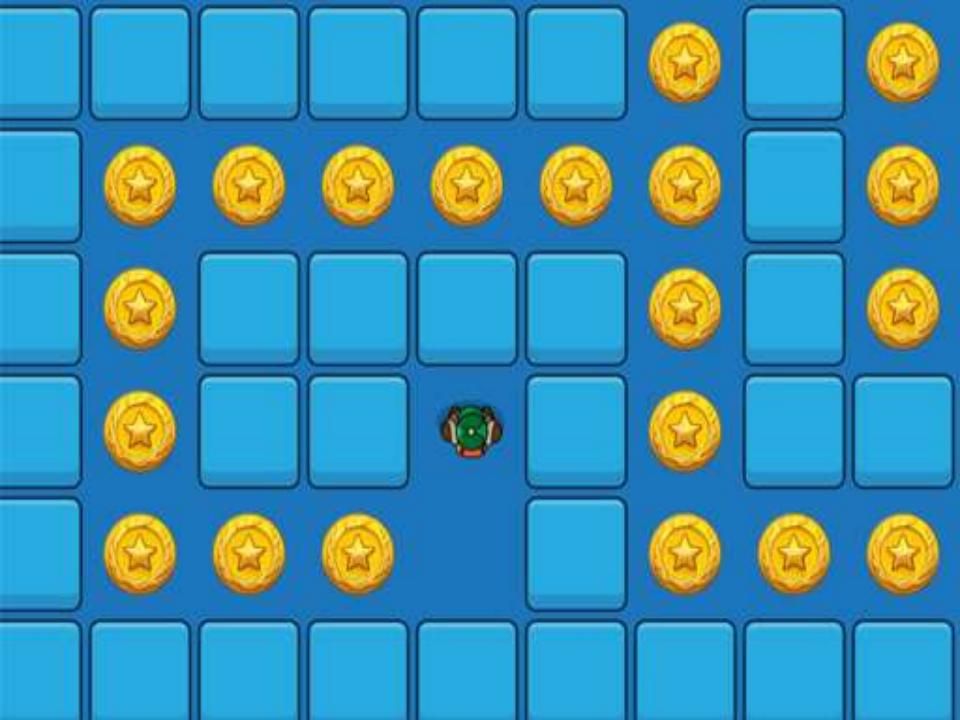
Tranquil Explorer: Wallbound Pathfinding Journeys
Game Introduction Weave through twisted mazes, crack brain-teasing puzzles, and scoop up coins as you go. Every choice shapes your journey in this gripping adventure—where sharp strategy meets split-second reflexes. Dive into a world of thrilling challenges, test your wits to the limit, and race toward the ultimate fortune. Ready to conquer the labyrinth and prove you’re the ultimate maze master? Your adventure starts now! Game Features 1. Multi-level Maze DesignFeatures progressive difficulty levels from basic 2D mazes to complex 3D paths, with challenges ramping up gradually.Integrates diverse mechanisms like rotating plates and time-limited passages, breaking the single exploration mode and enhancing puzzle fun.2. Dual Tests of Strategy and ReflexesEvery route choice affects clearance efficiency, requiring advance deduction and planning to exercise strategic thinking.Sudden traps and dynamic obstacles demand quick adaptation, balancing mental gameplay and fast-hand operations.3. High ReplayabilitySome mazes adopt a procedural generation mechanism, with different paths, traps and coin positions each time you enter.Supports offline single-player gameplay, allowing you to start a new adventure in fragmented time without network restrictions.4. Immersive Exploration ExperienceRich themed scenes create a unique visual atmosphere, making maze exploration more immersive.Collect coins to unlock personalized rewards, gaining clear a sense of achievement with each level to stimulate the desire to explore. Gameplay and Controls 1. Basic MovementControl the character's movement via the virtual joystick or direction keys to plan maze paths accurately; slide the screen to adjust the perspective and view the overall layout.2. Puzzle Solving & InteractionA prompt will appear when approaching mechanisms or treasure chests; tap the corresponding button to activate mechanisms or collect coins/items. Quickly change direction to avoid dynamic traps.3. Auxiliary FunctionsCheck core data such as health and coins at the top of the main interface; tap the hint button to get clues when stuck (limited times).4. General OperationsTap the pause button to interrupt the game, which supports saving progress at any time; tap "Next Level" to continue after clearing a level or "Home" to return to the level selection interface. Game Guide Navigating labyrinths, cracking puzzles, and hoarding coins—this game blends strategy and reflexes, but mastering it only requires grasping core rules and practical tricks. Below is a comprehensive guide to help you go from a novice to a maze conqueror. 1. Novice Foundation: Stabilize Progress and Avoid PitfallsFor beginners, prioritize "safe exploration" over rushing for coins. Use the screen-sliding perspective adjustment skillfully: before moving, slide to check 3-5 steps ahead, marking trap positions (like flickering floor tiles or moving spikes) with mental notes. When controlling the virtual joystick, avoid continuous sliding—tap lightly to move step by step, which prevents accidental triggering of hidden mechanisms.Coin collection follows the "detour principle": if a coin is near a high-risk trap (e.g., time-limited passages), skip it in early attempts. Focus on unlocking the "map hint" auxiliary function first—collecting 50 initial coins activates it, allowing you to view 20% of the maze layout, which is a lifesaver for complex levels. 2. Intermediate Upgrade: Optimize Paths and Improve EfficiencyWhen facing multi-branch mazes, adopt the "left-hand rule" as a basic strategy: keep your character close to the left wall and move forward. This avoids aimless wandering and reduces backtracking. For mazes with rotating plates, observe the rotation cycle first (usually 3-5 seconds) and time your movement to pass through during the stable phase.Dynamic traps (e.g., sudden closing doors) test reflexes. When hearing a "click" sound (the trap activation prompt), quickly release the joystick and tap the opposite direction to retreat. Remember: most traps have a 1-second buffer time—seizing this window can avoid failures. 3. Advanced Mastery: Random Maze Tactics and Score MaximizationRandomly generated mazes rely on "pattern recognition": pay attention to terrain features (e.g., crossroads with torches often lead to treasure chests). After entering, spend 10 seconds scanning the overall layout via perspective adjustment to identify the shortest path to the exit.To maximize scores, use the "offline brush coin" trick: in single-player offline mode, replay low-difficulty levels (1-10) repeatedly. These levels have fixed trap positions but random coin spawns, allowing you to collect 80+ coins per playthrough. Use accumulated coins to unlock the "speed boost" prop—activated when encountering long straight paths, it cuts通关 time by 30%. Finally, remember to save progress before challenging boss levels (every 5 levels). With these strategies, you’ll balance exploration, puzzle-solving, and collection, easily conquering every labyrinth!
